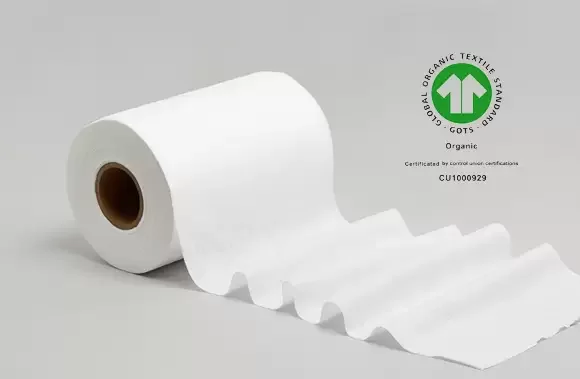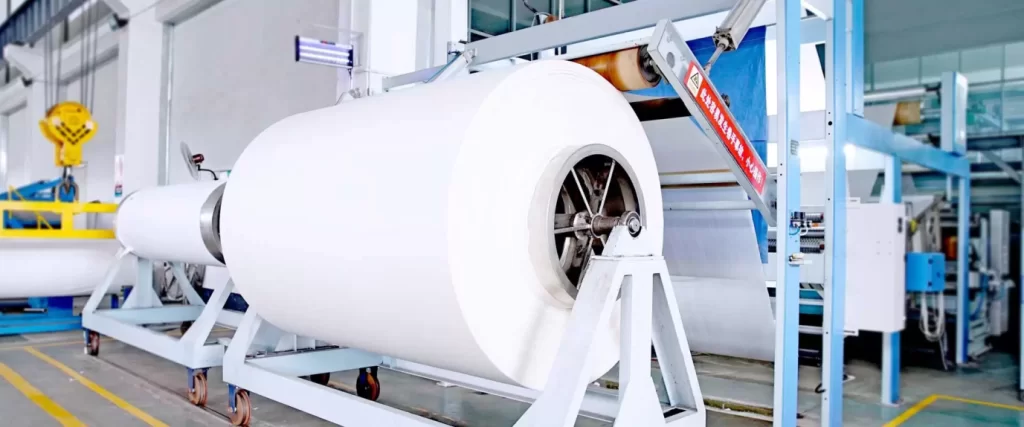


Cotton and polyester stand as the two most widely used fibers in nonwoven fabrics today. They can be seen in your facial wipes, masks, eco-friendly shopping bags, disposable bed sheets, and more. While many assume the distinction simply comes down to natural versus man-made origins, the difference between cotton and polyester nonwoven fabric goes much deeper.
They possess entirely distinct physical properties, structural characteristics, and applications. Understanding these variations is essential for selecting the right raw material for medical, industrial, or personal care products.
Read on for more about polyester vs cotton nonwoven fabric.
About Cotton Nonwoven Fabric
Cotton nonwoven fabric is derived directly from the cotton plant. Cotton is a natural fiber composed of pure cellulose. Inside each fiber, there is a hollow cavity known as the lumen. When the cotton boll matures and cracks open, the moisture inside the fiber evaporates, causing the lumen to collapse inward and the fiber to twist, forming convolutions.
This structure increases the friction and cohesiveness between fiber surfaces, making it very easy to spin the fibers into strong nonwoven fabrics. At the same time, the convolutions make cotton elastic and fluffy.
When these raw fibers are processed into cotton nonwoven fabric, they undergo a rigorous purification process to strip away the natural waxes, pectins, and oils that coat the fiber in nature. This transforms the cotton fiber from hydrophobic to hydrophilic.
What are the Properties of Cotton Nonwoven Fabric?
Due to its natural structure, cotton is soft and highly resilient, making it very suitable for the nonwoven fabric industry. Pure cotton nonwoven fabric features:
Soft and Breathable
Cotton fibers are short, fine, and soft. Even after entangling, the nonwoven fabric surface maintains a very low coefficient of friction, causing no irritation or itching when in contact with the skin. Its loose porous structure allows exceptional air circulation.
High Absorbency
Pure cotton nonwoven fabric possesses a natural moisture regain rate of about 8.5% and can rapidly absorb fluids equivalent to several times its own dry weight.
Skin-friendly
Cotton is naturally hypoallergenic and free from irritating synthetic chemicals, ideal for direct, prolonged dermal contact.
Durable
Dry cotton fibers have a moderate tensile strength, approximately 25-45 cN/tex, while wet cotton fibers can increase by 10%-20%. Thus, cotton nonwoven fabrics are not easily torn when used as disposable face wipes.
Biodegradable
As a natural cellulose material, cotton is sustainable and biodegradable. Microbial activity rapidly and significantly breaks down the nonwoven fabric structure into natural elements without leaving microplastics behind, especially for spunlace nonwoven fabrics.
Applications
These verified properties make cotton nonwoven fabrics the optimal choice for the medical and hygiene sectors. End-uses include surgical gowns, sterile gauze, wound dressings, feminine hygiene products, baby wipes, disposable face towels, adult incontinence products, and premium cosmetic care items.
What is Polyester Nonwoven Fabric?
Is polyester synthetic? Yes, it is an entirely man-made fiber created through chemical engineering. What is polyester made of? It is primarily composed of polyethylene terephthalate (PET), synthesized through a chemical reaction involving petroleum derivatives, air, and water.
The manufacturing process of polyester requires melting the PET polymer at high temperatures and extruding the viscous liquid through small holes called spinnerets.
Unlike the hollow natural cotton, polyester fibers form dense, solid polymer filaments with no internal pores or capillary voids. Their cross-sectional shape and micron diameter are dictated by the design of the spinneret holes.
Once extruded and cooled, these synthetic filaments are bonded together utilizing thermal calendering, airlaid, or mechanical needle-punching techniques to manufacture the final polyester nonwoven fabric.
What are the Properties of Polyester Nonwoven Fabric?
The synthetic extrusion process results in PET nonwoven fabrics having entirely different functional parameters compared to natural ones. The major difference between polyester and cotton lies in:
Strong and Durable
Polyester fibers exhibit exceptionally high tensile strength and elasticity. The solid polymer structure allows the resulting nonwoven fabric to withstand mechanical stress and tear.
Resistant to Stretching
The PET material has excellent resilience and is not easily deformed or wrinkled after rubbing, which is crucial for industrial filter media that require a crisp shape.
Quick-drying
Polyester is inherently hydrophobic by chemical design. It has a low moisture regain rate of approximately 0.4%-0.8%. Because the solid polymer fibers repel water rather than absorb it, the nonwoven fabric dries more quickly than cotton ones.
Abrasion Resistance
The dense, smooth surface of the extruded filaments provides a high degree of resistance to surface wear, friction, and chemical degradation. However, this also results in a harder, harsher tactile hand feel compared to cotton fibers.
Applications
Due to its high mechanical durability, chemical inertness, and structural rigidity, polyester nonwoven fabric is heavily utilized in rugged industrial applications. Common end-uses include industrial filtration media, automotive interior linings, heavy-duty cleaning products, etc.
Cotton vs. Polyester Nonwoven Fabric
When evaluating cotton or polyester nonwoven fabric, a direct comparison is necessary. The table below outlines the difference between cotton and polyester.
| Feature | Cotton Nonwoven Fabric | Polyester Nonwoven Fabric |
| Fiber Type | Natural cellulose | Synthetic polymer (PET) |
| Breathability | High; allows effective air circulation | Low; affected by manufacturing process |
| Absorbency | High hydrophilic (about 8.5% moisture regain) | Hydrophobic (0.4%-0.8% moisture regain) |
| Softness | Very soft texture | Harder, harsher hand feel |
| Durability | Moderate dry strength, high wet strength | High overall dry strength, shape retention, and elasticity |
| Skin Sensitivity | Hypoallergenic | May cause irritation for sensitive skin |
| Environmental Impact | 100% biodegradable, sustainable agricultural crop | Non-biodegradable, recyclable |
Overall, for the ultimate in skin comfort, absorbency, and biodegradability, pure cotton nonwoven fabric is the best choice. For a strong and durable industrial material, polyester nonwoven fabric offers a cost-effective solution.
Winner Nonwovens 100% Pure Cotton Nonwoven Fabrics
Pure cotton nonwoven fabric has become the preferred solution in the medical, hygiene, and personal care sectors due to its softness, durability, absorbency, and environmental friendliness. If your brand is selecting a supplier of pure cotton nonwoven fabric, Winner Nonwovens is your ideal partner.
In 2005, Winner Nonwovens independently developed cotton spunlace nonwoven fabric. Made from 100% natural cotton, it offers advantages such as high wet strength, hypoallergenic, autoclavable, and low bioburden. We also manufacture products including sanitary napkins, baby wipes, cotton pads, surgical gowns, and disposable facial towels, all made from 100% pure cotton nonwoven fabric.
With OEKO-TEX, GOTS, and Cotton USA certifications, Winner Nonwovens provides a safe and comfortable personal care experience for users around the world.
If you have any needs, feel free to contact Winner Nonwovens now!